How Workplace Flexibility Boosts Productivity (Infographic)
In the quest for workplace productivity, managers often focus on metrics, software, and processes. But what if the real secret isn’t a new tool, but a new mindset? That’s where workplace flexibility comes in. It’s not just a “nice” perk; it’s a powerful driver of productivity. This guide breaks down why giving employees more control over their work-life balance isn’t just good for them—it’s fantastic for your bottom line.
What Do We Mean by Workplace Flexibility?
Flexibility is more than just “working from home.” It’s a broad strategy that can include:
Remote Work: Allowing employees to work from home, either full-time or on a hybrid schedule.
Flexible Hours: Letting team members adjust their start and end times (e.g., 7 AM to 4 PM instead of 9 AM to 5 PM) to fit their personal lives.
Compressed Workweeks: Working a full 40-hour week in four 10-hour days, leaving one day free.
“Core Hours”: Requiring everyone to be online for key collaboration times (like 10 AM to 2 PM) but giving them freedom outside of that.
How Flexibility Directly Boosts Productivity
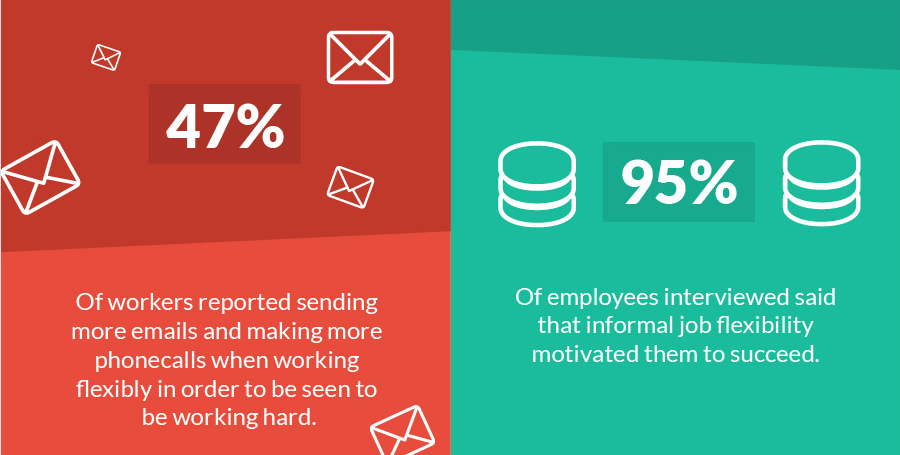
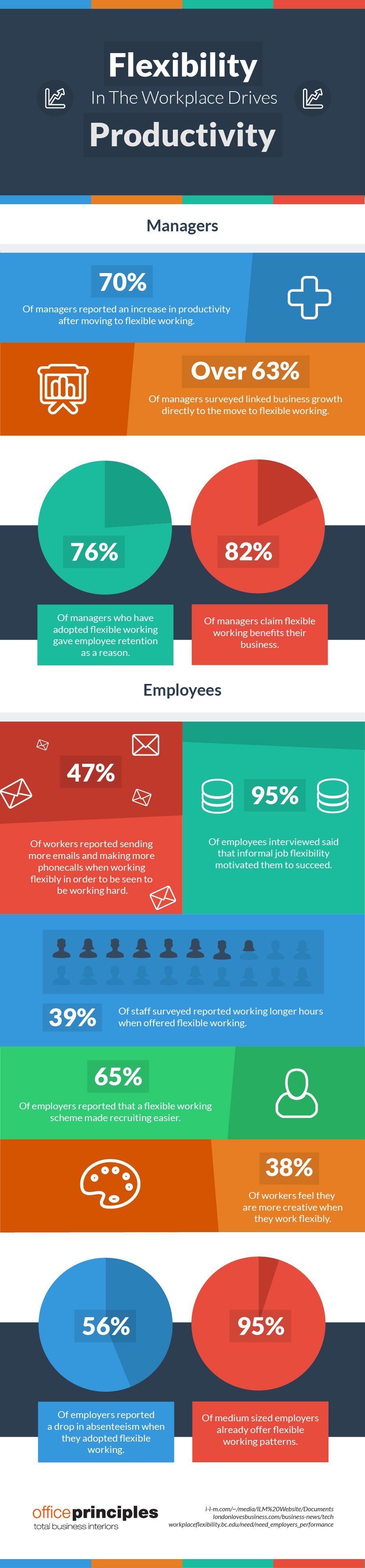
As our infographic below shows, the data is clear. But *why* does this happen? It’s not just magic; it’s psychology and practicality.
It Cuts Out the Commute: The average American spends nearly an hour commuting every day. Giving that time back to employees reduces stress, saves them money, and allows them to start their day focused on work, not traffic.
It Empowers “Deep Work”: The open office is a nightmare for concentration. Flexibility allows an employee to work from a quiet, controlled environment when they *really* need to focus, leading to higher-quality work in less time.
It Builds Trust and Loyalty: When you treat your employees like responsible adults, they act like responsible adults. This trust increases morale and loyalty, making them *want* to do a good job for you.
It Reduces Burnout: A flexible schedule allows an employee to handle life’s emergencies—like a sick kid or a doctor’s appointment—without using a whole sick day. This reduces stress and prevents the burnout that kills productivity.
Share or Embed This Infographic
Share this infographic on your favorite social media outlet!
Anthony is the founder and CEO of Atlantic Training. For Anthony, workplace safety isn't just a business; it's a passion he has been dedicated to for most of his life, having grown up inside his family's safety business.
After college, he began traveling the country, working side by side with the EHS and HR professionals assisting with their company's safety processes. His work took him directly onto their factory floors, active construction sites, and into their operations facilities.
Anthony saw firsthand what happens when training is just a box to check, and he knew there had to be a better way. He began Compliance and Safety in 2005, which would later become what you see today, Atlantic Training. His passion is simple: to create training that people actually pay attention to. Training that's practical, engaging, and genuinely keeps people safe on the job, without drama.